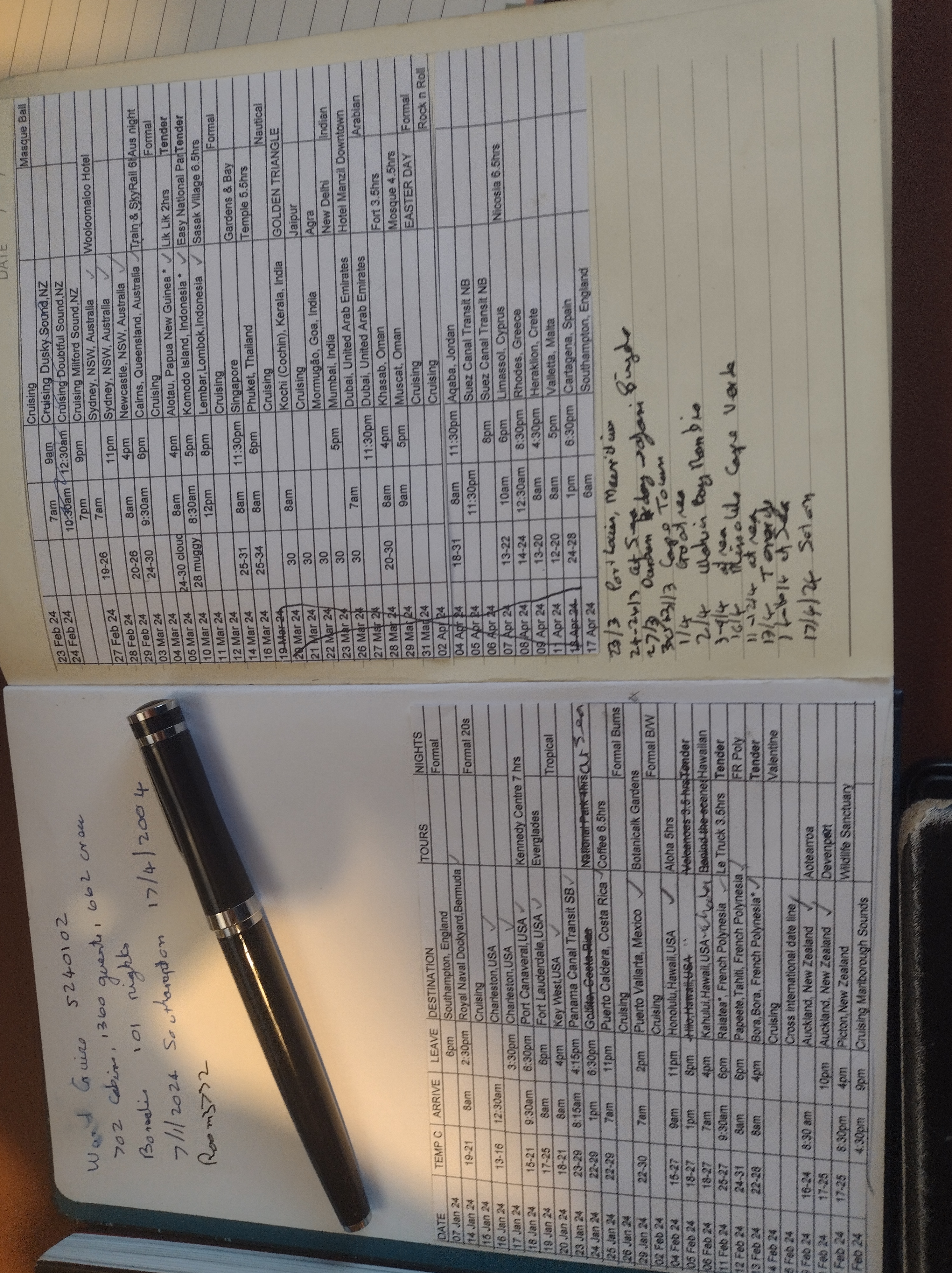
When I set out on a world cruise last year, I had grand ideas about how I would write a poem every day. I’d prepared notes, ideas, and prompts — all neatly tucked away in a folder. But as soon as Day 1 arrived, that folder was forgotten and it seemed a stupid idea.. The reality of the journey reshaped everything. Here’s how I approached writing those daily poems without feeling overwhelmed:
One Day at a Time: The key was to treat it like I did when I gave up smoking twenty years ago when I was in New York — just stop smoking one day at a time, no stress. No hassle, it was something I could do, and it worked. So I never thought about writing 100 poems — just the poem for that day.
Establishing a Routine: It took a few days at sea to settle into a rhythm. My wife, Frances, and I spent most of our time together, but there was one hour each afternoon when she attended her singing class. That became my designated writing time.
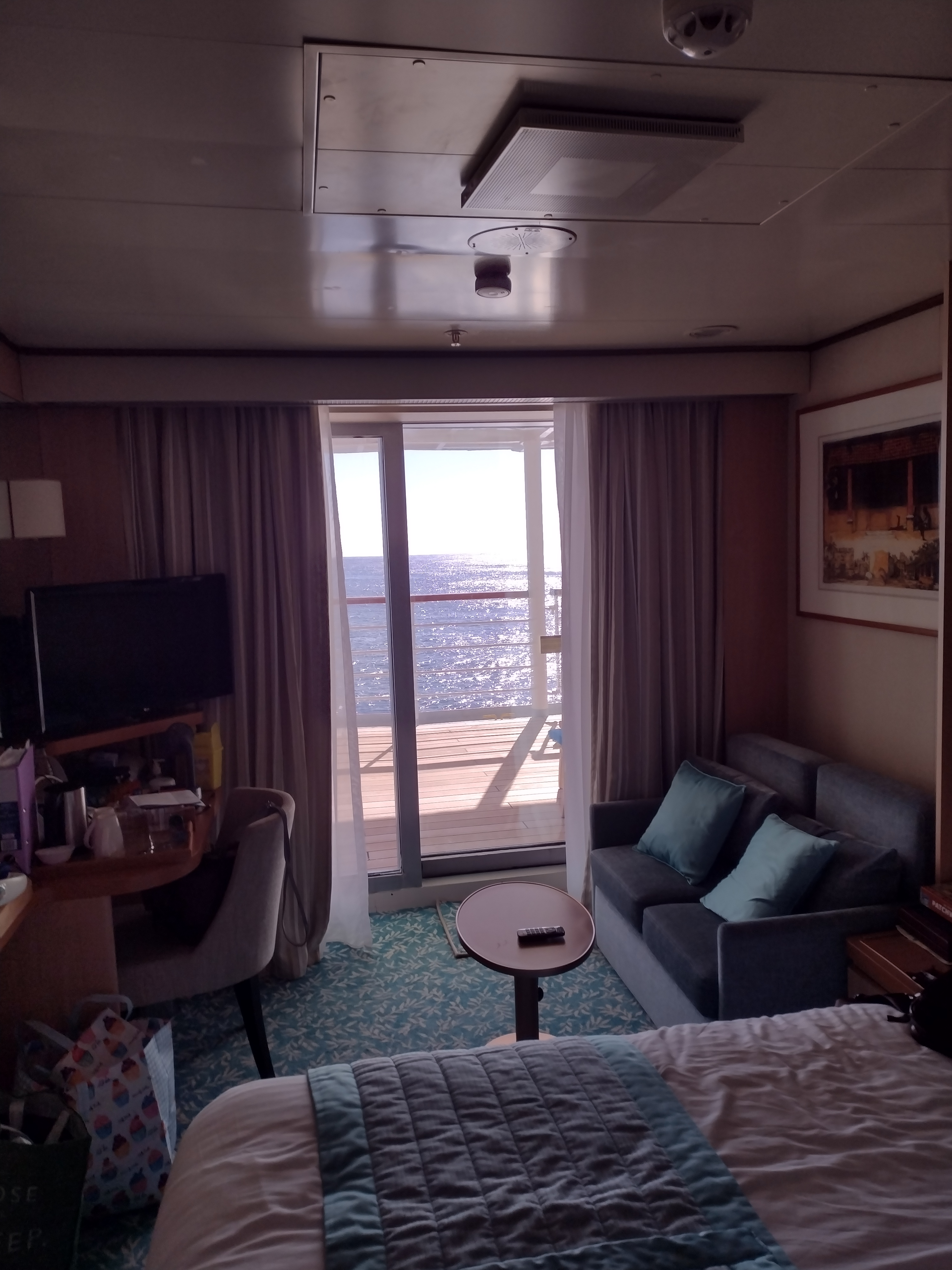
A Quiet Space: I would follow Frances to the choir rehearsal, then find a quiet seat at the nearby bar (shut at that time of day) and write about the day before. I could turn my hearing aid off so it would be really quiet, although the bar was shut, a waiter would always come up to me and ask if I wanted a drink. This gave me a consistent place and time to reflect, get something down. My very first line was “the boat escapes under cover of darkness.”
Adapting to Port Days: When the ship was in port, there were no singing classes — and no regular writing time. Instead, I found a second routine: a short poem during the 20-minute bath before dinner, capturing the day’s experiences and realising I was not an explorer hunting for new adventures but a tourist. There’s the excitement of seeing new places, but also the sense of being an outsider, observing rather than belonging. Some experiences were fleeting, while others left a lasting impression. The poems became a way to engage more deeply with what I was seeing, not just ticking off sights but noticing the small details — the light, the people, the unexpected moments.
Poems vs. Journals: Writing poems rather than keeping a journal made the process feel more creative. A journal might have captured facts and events, but poems allowed me to distil each day into an essence — a mood, an image, or a small story. Poems offered a way to interpret the experience rather than just record it, leaving room for imagination as well as memory.
Momentum: By focusing only on the next poem, not the whole journey, I kept going without pressure. One poem led to another, until suddenly there were 100.
Adapting to Reality: What I’ve learned — and what others have often said — is that you can plan as much as you like, but reality often forces you to adapt. The trick is to go with it, find what works, and keep moving forward. As Winston Churchill said: “Plans are of little importance, but planning is essential.”
Mary Oliver, The Summer Day: A poem that encourages slowing down and noticing the world around you.
Rainer Maria Rilke, Letters to a Young Poet: Thoughts on creativity, solitude, and the importance of daily observation.
Elizabeth Bishop, Questions of Travel: Exploring the complexity of being a traveller, torn between wonder and detachment.

 Rodney Wood