Used grammarly.com online-spellcheck.com and slickwrite.com Found some passive voices, an “I” on a line by itself, some “‘” missing and some spelling mistakes. So very useful even after going through them before with a fine toothcomb. I used one which said my writing contains too many poor quality phrases and I have below average vocabulary usage.
RED CEILING PRESS
They “publish contemporary poetry in the form of limited edition chapbooks. We like innovative, experimental and avante-garde poetry in particular.” I am very grateful, and surprised, that Mark Cobley decided that poems made by my little poetry machine fitted, especially after reading the prose poems of Gareth Twose and Katherine Sowerby. Now I’m close to sending 32 poems off, well Thursday actually. I did start with a few more but realised some didn’t fit and others were just bad. If anyone wants a look to spot typos, grammar errors and so on drop we a line with your email address and I’ll wing it your way.
PAMPHLET
This year I thought it about time I approached some publishers about a pamphlet. I soon found out most weren’t taking on any new work but some were. Eventually, someone replied saying they like my work and if I could add some more poems over the summer they’d be happy to publish. So I must do that and think about cover image, biog, blurb and review (for the back cover) of DANTE CALLED YOU BEATRICE. So thanks to everyone who helped me get this far and especially to Carrie Etter (who set me thinking of a new form), Todd Swift (who introduced me to new poets and gave me encouragement), Greg Freeman (who’s been a good friend and enthusiastic about poetry in general) and David Cooke (for his encouragement). The inexpert photo blow is a cut-out by my friend Dick Boulton.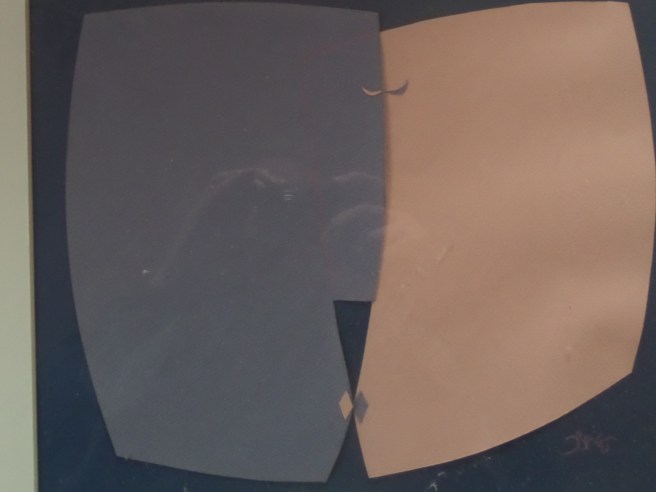
My Joy
Nunc Dimittis, James Laughlin
Little time now
and so much hasn’t
been put down as I
should have done it.
But does it matter?
It’s all been written
so well by my betters,
and what they wrote
has been my joy.
James was an heir of his family’s iron and steel business. He majored in Latin and Italian at Harvard and studies at Ezra Pound’s “Ezuversity”. In 1935 Pound persuaded the young man to give up his poetic ambitions and “do something useful,” like publishing. The result was New Directions who went on to publish WC Williams, Henry Miller, Dylan Thomas and Delmore Schwartz among others.”It is better,” James wrote, “to be read by eight hundred readers and be a good writer than be read by all the world and be Somerset Maugham.” I didn’t like poetry at school and only started reading it in my late 20s. My guide was Martin Seymour-Smith’s monumental “Guide to Modern World Literature” which introduced me to such stunning writers as Trakl, Vallejo and Mandelstam as well as the poetry of Spain, Italy and Eastern Europe. It’s impossible to compete with them so the joy lies in reading them. The only thing you can do as far as writing is concerned is be yourself and discover that maybe there is something only you can say. It has taken me a lifetime to get there.
Post-truth
Post-truth is a wonderful word. In the poetry world for example anything that you publish yourself has become “published”. To quote the bible, not something I usually “Vanity of vanities! All is vanity.”
POETRY VANITY PUBLISHING
“Personally I can’t get very excited about this controversy over whether XYZ is a mainstream or vanity firm or something in-between.”
“Never pay to get your poems published.”
“Poetry is too marginal proposition to be worth serious attention”
“The majority of the contemporary poetry industry, insofar as it has a business model, is based on extracting money from writers, not giving it to them. ”
1. DEFINITION
Vanity is excessive pride in or admiration of one’s own achievements and as such applies to both the author (who wants to get their work into print) and the publisher (who is made to feel important, worthwhile, gains pleasure or kudos in publishing his/her work and those other others). Vanity Publishing is a term coined by Johnathon Clifford in 1959/60 and the definition is “Vanity publishing, also self-styled (often inaccurately) as “subsidy”, “joint-venture”, “shared-responsibility”, or even “self” publishing, is a service whereby authors are charged to have their work published.” Generally speaking they will accept the work of anyone, charge the author for the production of their work and/or the author must purchase X copies of their own book. However, where do you fit print on demand, different types of subsidy publishing and self publishing services offered to writers – editing, proof reading, cover design, printing and marketing?
2. EXAMPLES FROM THE PRESS
Publish through …… Avoid the vanity press. All categories considered. Combined Editing and publishing package. Your book never out of print and for sale in all major UK &US on-line bookstores, including Amazon and Barnes & Noble.
Authors invited to submit manuscripts all categories including poetry. New authors welcome.
Writing prize for short story or poem any length up to 2500 words. Theme refugees and peace-seekers. No entry fee. Closes 31n March.
Free poetry contest, max 21 lines, £50,000 in prizes.
Best submissions will be published in an anthology
Poems on any subject required for anthology.
A proven reading/criticism service for new and published writers. Professional appraisals of … poetry. I am a scout for a leading literary agency.
If you’d like to develop you poetry, then this course is for you.
Creative writing weekends from £240.
To be considered they must buy one of our publications.
3. VANITY PRESSES: THE GOOD
- You don’t have to convince the poetry editor to accept your book.
- You have exhausted all other publishing possibilities (that is, being turned down by too many publishers) and, having worked long and hard on your poetry collection, want to see it published.
- Writing poetry is a pleasurable hobby which you have enjoyed and you use a Vanity Publisher to provide copies of your book which you can then give to friends etc.
- You don’t want to spent a huge amount of time or have a lack the expertise of book production.
- You can get the book published in in two or three months instead of two of three years.
- You have control over what’s included in the final manuscript and a say in book production.
- You may do a lot of open mic readings or are going to a festival and need to have a number of books to hand in order to sell to people who enjoy your work.
- You make more money per book.
- It may of course get picked up by a commercial publisher but this is unlikely.
- It allows publishers to accept more poets, have more writers in print with less overall risk.
- The publisher no longer has to finance the entire project.
- You may want to use a particular imprint and have them as the publisher of record.
4. VANITY PRESSES: THE DOWNSIDE
- They target new writers, amateurs, beginners, who just want to see their book published
- They print anyone
- You have to bear the up-front or set-up costs
- You pay for “extras” such as edits, custom cover design, formatting, publicity etc and they still offer you a low percentage on your book’s earnings
- Unfulfilled promises esp marketing
- You probably won’t get any/or the same level of editing/proofing as with a proper publisher
- Most magazine editors won’t review the books
- You’re totally responsible for marketing and distribution
- Won’t help much if you’re interested in a career as a serious writer as it does not offer validation for you as a writer
- Publishers make money from the writer who buys their own books but they give the writer a small number of free copies
- No editing of the poems
- Some presses are misleading and pretend to be traditional publishers
- You don’t know the quality of the finished book
- No bookstore distribution
- You must buy a book from the publisher before they will consider you
- Reading fees for prospective writers
An editor calls me pretentious
to answer your questions about being pretentious I need to go back to 2013 when I wrote a poem using three line stanzas. It was a decent poem but it did not excite me. So I thought of John Ashberry and pantoums, the blues and a recent painting by Raul Cordero. The original stanza lines in the poem
1
2
3
became the new lines
1 (made up of the old lines 2+3)
2 (made up of the old lines 1+2)
3 (made up of the old lines 1+3)
I was struck at how powerful the tercet now sounded as the rhythm and rhyme became intensified. So I applied it to the other 3 line stanzas in the poem. The next problem was how to capitalise the start of lines and how to punctuate? It would look silly capitalising the original line 1, the new line 1 would be at odds with how the poem was put together, and as I’ve always used a lower case in the start of each line unless it was the start of a sentence. It was a no brainer. Luckily the stanza is end stopped at line 3, so as there is a line break and a blank line there’s no real need for a full stop. However I still need to indicate a pause between line 2+3, 1+2 and 1+3. I tried putting them on separate lines but I preferred the three line structure (must be the catholic in me), commas didn’t look right, spaces meant that some of the lines ran over, stepped lines would almost do the job but then magazines could not print them easily and it did look a little pretentious. I wanted something simple and straightforward. When I read the poem out loud I used a red slash to indicate a pause and a slash is actually a punctuation mark known as a virgule – offset by spaces to either side is used to mark line breaks when transcribing text from a multi-line format into a single-line one. It is particularly common in quoting poetry, song lyrics, and dramatic scripts, formats where omitting the line breaks risks losing meaningful context. I settled with that. It’s sharp, simple, looks good and does just what I want it to.
As to the lower case I. A few months ago I read “milk and honey” by rupi kaur. I liked the way it seems to bring a level of equality (both in the poem and in the social hierarchy), deflate the ego and make I=we. In these particular love poems that was exactly what I wanted.
Clear reasons I think. Poems using the same form as this (only not using the lower case I) have been published in Tears in the Fence, The Journal, Message in a Bottle and are forthcoming in Envoi and Brittle Star. Interestingly the editors did not ask about the repetition or the virgules
VANITY PRESSES- THE GOOD THINGS
- you don’t have to convince the poetry editor to accept your book.
- You have exhausted all other publishing possibilities (that is, being turned down by too many publishers) and, having worked long and hard on your poetry collection, want to see it published.
- Writing poetry is a pleasurable hobby which you have enjoyed and you use a Vanity Publisher to provide copies of your book.
- You don’t want to spent a huge amount of time or lack the expertise of book production.
- You can get the book published in in two or three months instead of two of three years.
- You have control over what’s included in the final manuscript and a say in book production.
- You may do a lot of open mic readings or are going to a festival and need to have a number of books to hand in order to sell to people who enjoy your work.
- You make more money per book.
- It may of course get picked up by a commercial publisher but this is unlikely.
- It allows publishers to accept more poets, have more writers in print with less overall risk.
- The publisher no longer has to finance the entire project.
- You may want to use a particular imprint and have them as the publisher of record.
POETRY AND VANITY PUBLISHING
“Personally I can’t get very excited about this controversy over whether XYZ is a mainstream or vanity firm or something in-between.”
“never pay to get your poems published”
“Poetry is too marginal proposition to be worth serious attention”
1. DEFINITION
Vanity is excessive pride in or admiration of one’s own achievements and as such applies to both the author (who wants to get their work into print) and the publisher (who is made to feel important, worthwhile, gain pleasure or kudos in publishing his/her work and those other others. Vanity Publishing is a term coined by Johnathon Clifford in 1959/60 and the definition (as accepted by the UK Advertising Standard Authority) is “Vanity publishing, also self-styled (often inaccurately) as “subsidy”, “joint-venture”, “shared-responsibility”, or even “self” publishing, is a service whereby authors are charged to have their work published.” Generally speaking they will accept the work of anyone, charge the author for the production of their work and/or the author must purchase X copies of their own book. However, where do you fit print on demand, different types of subsidy publishing and self publishing services offered to writers – editing, proof reading, cover design, printing and marketing?
2. EXAMPLES FROM THE PRESS
Publish through …… Avoid the vanity press. All categories considered. Combined Editing and publishing package. Your book never out of print and for sale in all major UK &US on-line bookstores, including Amazon and Barnes & Noble.
Authors invited to submit manuscripts all categories including poetry. New authors welcome.
Writing prize for short story or poem any length up to 2500 words. Theme refugees and peace-0seekers. No entry fee. Closes 31n March.
Free poetry contest, max 21 lines, £50,000 in prizes.
Best submissions will be published in an anthology
Poems on any subject required for anthology.
A proven reading/criticism service for new and published writers. Professional appraisals of … poetry. I am a scout for a leading literary agency.
If you’d like to develop you poetry, then this course is for you.
Creative writing weekends from £240.
To be considered they must buy one of our publications.
TRIBES
I’ve finished another of the novel and have started reading about deep third person POV and this set me thinking about imagined communities, that of poetry and prose. I like poetry. A great place where everyone is helpful, there are different genres, specialized magazines, publishers, readings, workshops, competitions, books showing you how to write and so on. Writing poetry has made me aware of using senses, how to be concise, use sound, voice, imagery and how to edit. As Hugo Williams said “if you can’t write poetry you can’t write prose.” I’ve been an active member of this community for the past 30 years.
Unfortunately, I had an idea. I wanted to write something longer than 40 lines. I wanted to do something with characters, that has a plot and theme. I even had a title, The Poet Assassin, and a tag line. So I sat down and started the solitary business of writing and finished up with a 60,000 word draft. Great I thought, now I can find out how I should have done it and what to do next. A visit to the local bookshop for advice was overwhelming and confusing, as was a search of the internet. Lots of names being thrown about, jargon, do’s and don’t’s. It was a different world, a different community.
A look at my bookshelf shows BANG SAID THE GUN next to THE FORWARD BOOK OF POETRY, JOHN HEGLEY next to THOMAS HARDY, and ELVIS MCGONAGALL next to OSIP MANDELSTAM. Page vs stage, academic vs lay, cooked vs raw, pale vs redskin, open mic vs serious, doggerel vs hardcore poetry. Different communities and tribes where trading relations haven’t yet been worked out. The big question – where do I belong in all this?
 Rodney Wood