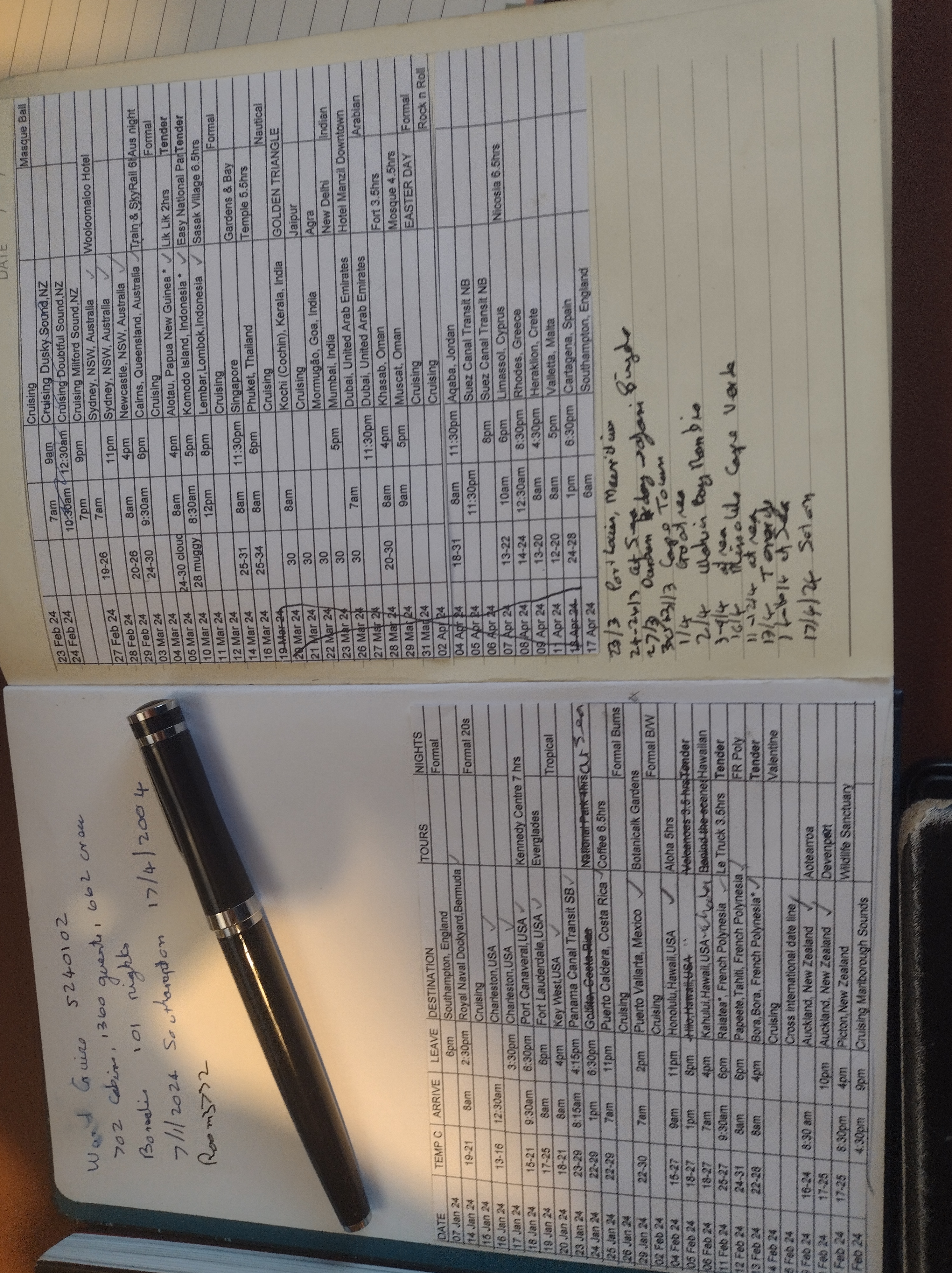
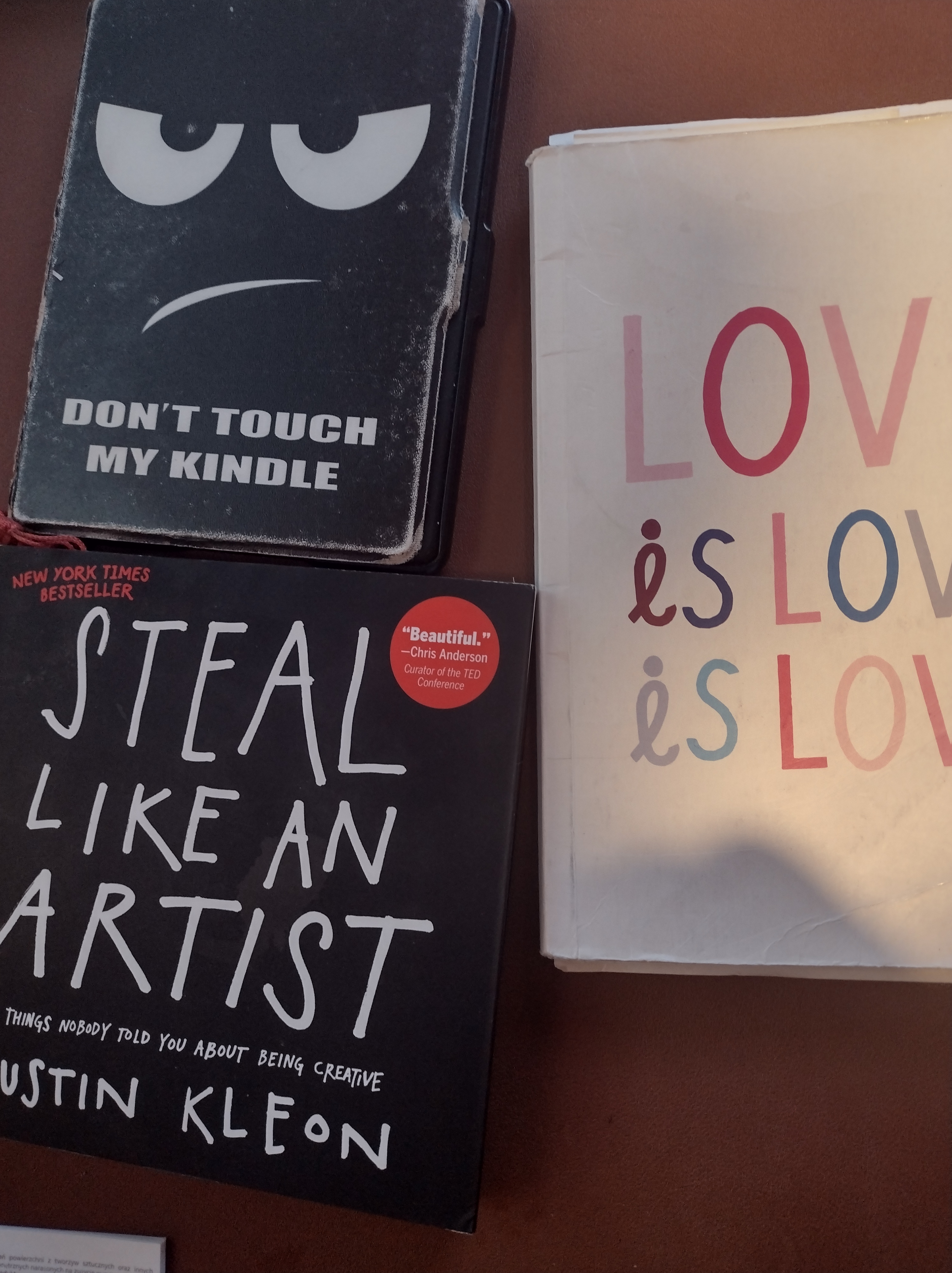
Before I start there are a few pics. The first one shows the itinerary, and the changes to it and the pen I used to write the poems each day. While the second pics shows the cover of the Austin Kleon book, my Kindle loaded with poems and the notebook I used for the first rough draft.
Establishing a Seafaring Routine
Writing a poem daily encourages discipline and routine in my creative process, much like the structured rhythm of life aboard a cruise ship. It helps establish a daily writing habit, pushing the poet to engage with their craft regularly, whether inspired by the vast ocean or a bustling port city. There are 66 days at sea and 35 in port.
Sailing Past Perfectionism
With the goal of completing one poem each day, this practice emphasizes quantity over quality, helping me break free from the anchors of perfectionism, as if that’s been the case in the past. It encourages experimentation and spontaneity, allowing words to flow as freely as the waves beneath the ship[.
Charting Improvement Through Practice
Just as a seasoned sailor improves with each voyage, writing daily hones my technique, creativity, and fluency. Each port of call offers new inspirations and challenges, sharpening craft over time
Exploring New Horizons
Like discovering unexplored lands, writing a poem a day prompts me to delve into uncharted subjects, forms, and ideas. The constant need for new material expands creative boundaries, leading to surprising discoveries in the writing process.
Embracing the Rough Seas
Not every poem will be a masterpiece, just as not every day at sea is calm and sunny. The focus is on the journey rather than the destination, allowing for rough drafts and incomplete thoughts that can be refined and revised later.
Developing a Poetic Compass
Writing daily can help me discover or refine my unique voice, much like a ship finding its true north. Over time, patterns in theme, tone, and style emerge, guiding me towards my artistic true north.
Mindfulness on the High Seas
This practice becomes a form of daily reflection, where the poet uses writing to process the myriad experiences of life at sea. It can be a therapeutic activity, fostering introspection amidst the ever-changing seascape.
I’ve already incorporated references to Austin Kleon’s “Steal Like an Artist” in the previous blog draft, drawing from multiple search results. Here are some additional insights and references to enrich the blog:
Inspiration from Creative Voices
Austin Kleon’s philosophy perfectly complements the 101-day poetry journey. As he notes, “Nothing is original” and artists should “steal like an artist” – meaning absorb influences, transform them, and create something uniquely personal. This approach aligns beautifully with my poetry project, where each day’s poem can be inspired by travel experiences, other poets, or creative influences.
Poetic Healing and Wellbeing
Recent research adds depth to my creative endeavour. A University of Plymouth study revealed that poetry can significantly impact mental health, helping people cope with loneliness, anxiety, and depression. Over 50% of participants in their research found that reading and writing poetry helped them process emotions and reduce isolation.
Creative Lineage
Audre Lorde’s said, “Poetry is not a luxury. It is a vital necessity of our existence.”
Adrienne Rich states that poetry is “the skeleton architecture of our lives” and provides “a bridge across our fears of what has never been before”.
Joy Harjo emphasizes poetry as a deep listening practice: “When I began to listen to poetry, it’s when I began to listen to the stones, and I began to listen to what the clouds had to say…”
Alice Walker describes poetry as “the lifeblood of rebellion, revolution, and the raising of consciousness”
Clarissa Pinkola Estes notes that poetry can be a lifeline, saying “There’s a reason poets often say, ‘Poetry saved my life’”
Rita Dove describes poetry as “language at its most distilled and most powerful”
W.H. Auden defines it as “the clear expression of mixed feelings”. These descriptions underscore poetry’s essential role in human communication and emotional processing.
Consider Kleon’s advice:
– Choose “friendly ghosts” (inspiring artists) to guide your creative process
– Study works that resonate with you
– Allow yourself to be influenced while developing your unique voice[2]
Some references:

 Rodney Wood